Understand active breakouts, lingering colour changes and structural scars, and learn how to approach a thoughtful, personalised skin treatment plan.
Educational information for a more useful consultation. Personal treatment decisions need an individual clinical assessment.
Three concerns that need different conversations
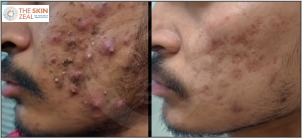
A breakout, a brown mark and an indentation may appear together on the same cheek, but they represent different skin concerns. Active acne involves blocked hair follicles and inflammation. A flat mark may remain after the inflammation settles, while a structural scar changes the skin’s surface or texture. Understanding which concern is most relevant to you is an important first step towards choosing an appropriate approach.
Someone experiencing new, painful breakouts may need to focus on controlling active acne before considering scar procedures. Another individual whose acne has settled may be more concerned about lingering pigmentation or uneven texture. These concerns can coexist, but they do not necessarily respond to the same treatment. This guide explains the differences and why understanding your skin’s condition should come before selecting a product or procedure.
What happens inside an acne-prone follicle
Acne develops within the hair follicle and its associated oil gland. Excess oil, accumulated dead skin cells and inflammation can contribute to blocked follicles and the formation of different types of acne lesions. Hormonal changes can influence oil production, which helps explain why acne affects both teenagers and adults. Family history may also contribute to an individual’s tendency to develop acne. Stress can aggravate existing breakouts in some people, but having acne is not a personal failure or a reflection of poor hygiene.
Understanding this process helps explain why simply washing your face more frequently or scrubbing harder is unlikely to resolve the underlying concern. In fact, excessive cleansing can irritate the skin and make it more uncomfortable. A dermatologist considers the pattern, severity, duration and associated symptoms rather than assuming that one skincare habit is responsible. Identifying how your acne behaves is more useful than repeatedly changing products without a clear plan.
Recognising different types of spots
Acne can appear in several forms. Blackheads and whiteheads develop when hair follicles become blocked. Inflamed acne may present as raised bumps or pustules containing pus, while deeper nodules and cyst-like lesions can cause tenderness and pain beneath the skin. Different types of lesions may occur simultaneously, which is why acne should not be assessed only by counting visible spots.
The appearance of inflammation can also vary according to skin tone. Instead of looking distinctly red, affected areas may appear brown, purple or darker than the surrounding skin. Acne can involve the face, chest and back, and each area may affect daily life differently, including clothing choices, physical activity and sleep. During your consultation, explain which areas are affected, whether the spots are painful and whether they leave persistent marks. These details help create a more complete understanding of your concern.
Why a flat mark is not necessarily a scar
After an acne lesion heals, a brown or grey mark may remain because inflammation has influenced pigment production. This is commonly known as post-inflammatory hyperpigmentation. Some individuals also experience lingering redness or colour changes after a breakout. These marks can occur across different skin tones and may remain visible for an extended period, particularly in darker skin.
A flat colour change does not automatically indicate permanent damage to the skin’s structure. This distinction matters because pigmentation and structural scarring require different treatment considerations. A resurfacing procedure intended for uneven texture may not be the appropriate starting point for a flat brown mark. The first step is to establish whether the concern involves colour, texture or both. A professional assessment helps distinguish these features and avoid unnecessary combinations of treatments.
How structural scars develop
Acne scars can develop when inflammation affects the deeper supporting structures of the skin. Depending on how the skin heals, the result may be an indentation or a raised scar. Deep and persistent inflammatory acne can increase the likelihood of scarring, while picking and squeezing spots may add further inflammation and tissue injury. Individual healing tendencies also influence the final appearance.
It is important not to view acne scars as a result of insufficient skincare or personal carelessness. They can develop even when someone makes a genuine effort to manage their acne. Raised scars and depressed scars are also different concerns and should not automatically be approached with the same treatment method. If you have previously developed prominent or raised scars, share that history before considering any procedure. Managing active inflammatory acne remains an important part of reducing the risk of further scarring.
Why scar shape changes the treatment discussion
Depressed acne scars can have different shapes and depths. Some are narrow and deep, commonly described as ice-pick scars. Others have broader, clearly defined edges and are often referred to as boxcar scars. Rolling scars create a more undulating or uneven surface because of changes in the tissue beneath the skin. Several scar types may be present on the same face, making individual assessment particularly important.
Treatment planning should consider the depth, shape and attachment of each scar rather than treating all uneven texture as one condition. Depending on the findings, professional options may include resurfacing procedures, controlled microneedling, selected surgical techniques or other approaches. These treatments are not interchangeable, and no single device can be assumed to address every scar pattern equally. Ask which specific feature a proposed procedure is intended to improve and what limitations should be expected.
Keeping everyday skin care gentle
A consistent and gentle skincare routine can support acne-prone skin. Mild cleansing helps remove surface oil, sweat and everyday impurities without creating unnecessary friction. Using your fingertips rather than abrasive brushes or harsh scrubbing tools can help minimise irritation. Repeatedly cleansing until the skin feels tight does not resolve the processes responsible for acne and may make an already sensitive skin barrier more uncomfortable.
Products labelled non-comedogenic are designed to reduce the likelihood of contributing to clogged pores, although individual tolerance can still vary. Keep your routine practical and introduce new products thoughtfully rather than changing everything at once. If you are already using a prescribed acne treatment, ask how your cleanser, moisturiser and sunscreen should fit around it. Even naturally oily skin can experience dryness, sensitivity and irritation, particularly during treatment.
Avoiding the cycle of constant product changes
When new spots continue to appear, it can be tempting to replace your skincare products every few days. However, many acne treatments require several weeks or sometimes months before their response can be evaluated meaningfully. Frequent changes make it difficult to understand whether a product was given sufficient time to work, whether it was unsuitable or whether irritation was affecting the skin. Consistency should be guided by an appropriate treatment plan rather than by short-term expectations.
This does not mean that you should tolerate severe irritation or an unexpected reaction. If a prescribed product causes significant discomfort, worsening inflammation or another concerning response, contact the prescribing clinician for advice. Keep a simple record of when products were introduced and how your skin responded. Photographs taken in similar lighting can also help document changes over time without creating the pressure to inspect every new spot repeatedly.
Sun protection and the visibility of marks
Sun exposure can make existing pigmentation more noticeable and may prolong the visibility of certain post-acne marks. Sun protection is therefore an important part of caring for acne-prone skin, not simply an additional cosmetic step. A suitable broad-spectrum sunscreen, shade and protective clothing can work together to limit exposure. The choice of sunscreen should also consider your skin’s texture and tolerance, particularly if heavier or fragranced formulations tend to cause discomfort.
Consistency is more important than choosing a complicated routine. Select a sunscreen that feels comfortable enough to use regularly and follow its application instructions. If you use makeup or cosmetic camouflage, that is entirely a personal choice and does not take away from your treatment goals. At the end of the day, remove products gently rather than scrubbing areas that are already inflamed or sensitive. A balanced routine should support your skin without adding unnecessary irritation.
When to seek professional assessment
Persistent breakouts, deep painful lesions, newly developing scars and acne that continues despite your current routine are good reasons to arrange a professional assessment. You do not need to wait until acne becomes severe before discussing it. A dermatologist can also consider whether another skin condition may be producing acne-like symptoms. Early attention to persistent inflammation may help reduce the risk of additional scarring.
Before your consultation, prepare information about previous treatments, current medicines, allergies and relevant health changes. Mention pregnancy, breastfeeding or plans for pregnancy, as these circumstances can influence which acne treatments are appropriate. It is equally important to explain how acne affects your everyday life and confidence. Two people with similar-looking breakouts may still require different approaches because their medical history, skin characteristics and treatment needs are not necessarily the same. Avoid restarting old prescription medicines or using someone else’s treatment plan without professional guidance.
Planning scar treatment without unrealistic promises
Improving the appearance of acne scars and completely removing them are two very different expectations. Depending on the type and depth of scarring, treatment may involve several stages, recovery periods and a degree of improvement rather than complete correction. A responsible consultation should explain these limitations before a procedure is scheduled. Ask what change may realistically be expected for your particular scar pattern and how progress will be assessed.
The discussion should also include risks relevant to your skin tone and healing history. These may include temporary or persistent pigmentation changes, irritation, infection and, in some circumstances, additional scarring. Before-and-after photographs can provide context, but they should be viewed with attention to lighting, camera angles and the treatment history behind the images. You should have enough information and time to consider an elective procedure. In some cases, controlling active acne first or postponing scar treatment may be the more appropriate decision.
Making the appointment useful in Zirakpur
Before visiting The Skin Zeal in Zirakpur, prepare a brief timeline of when your acne began, which areas are affected and what you have already tried. Bring the names of your skincare products or photographs of their packaging so that their ingredients can be reviewed. If your main concern is acne marks, consider whether you are noticing colour changes, uneven texture or both. Mention any upcoming events as well, so that expected recovery and treatment timing can be discussed realistically.
During your consultation, explain what concerns you most and what kind of improvement you hope to achieve. At The Skin Zeal, our approach focuses on understanding active acne, pigmentation and structural scarring as separate but sometimes related concerns. Our team can discuss the findings, explain suitable treatment categories and help you understand their benefits, limitations and recovery considerations. A consultation is an opportunity to make an informed decision; it does not create an obligation to proceed with a particular procedure or guarantee a specific outcome.